
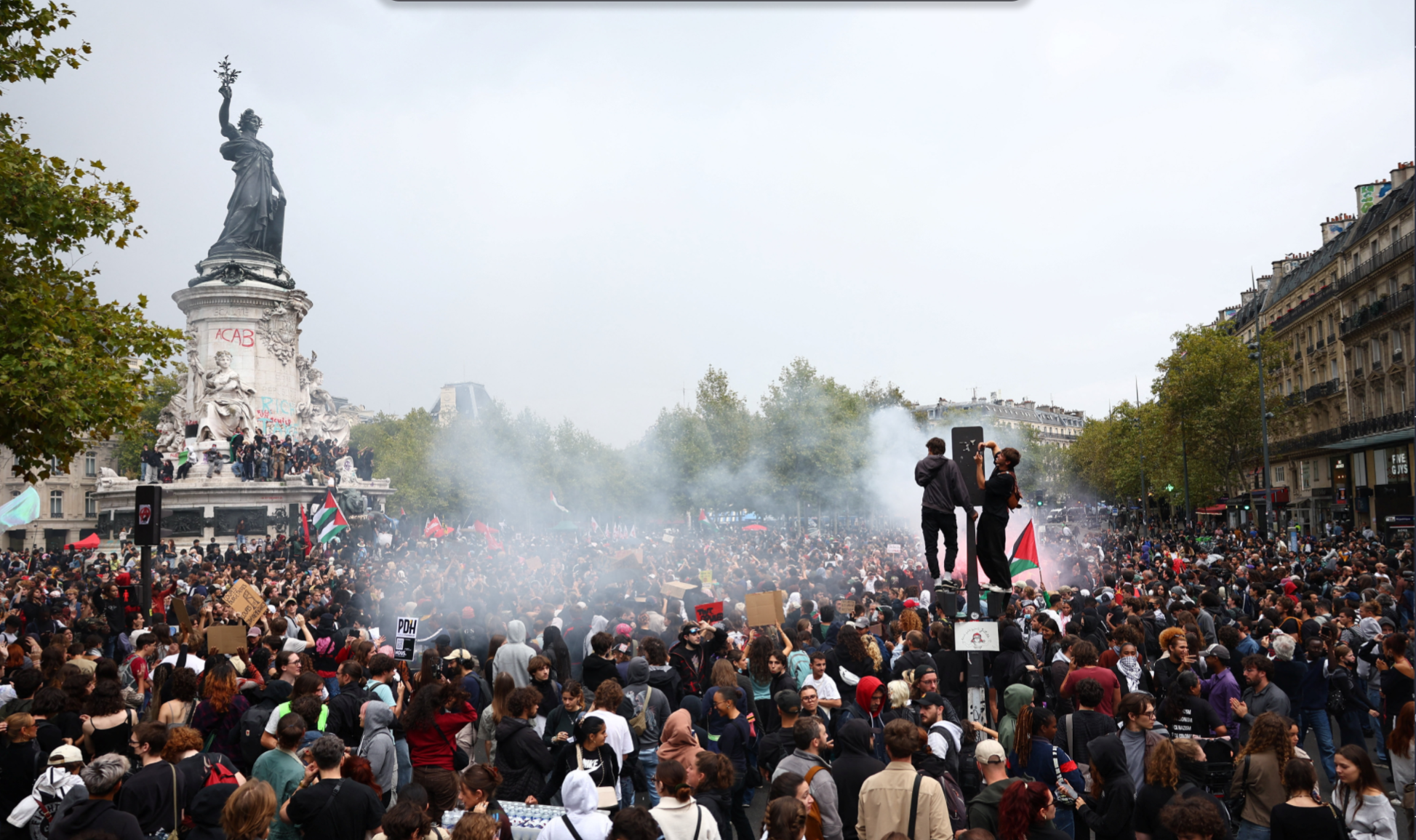
In France, the mobilization reached a fever pitch, with estimates suggesting between 410,000 and 800,000 participants gathered across 289 separate protests. What began as a student-led movement against underfunded schools has expanded into a broader labor revolt. Interior Minister Laurent Nunez confirmed nearly 1,000 arrests as police deployed tear gas and water cannons against crowds that Jean-Luc Mélenchon praised as a "total victory for the social movement."
The unrest rippled across the continent. In Belgium, demonstrators clashed with police over public service cuts, while in Madrid, approximately 25,000 people rallied to demand that pensions remain indexed to inflation. Lisbon saw "a sea of people" occupying city squares to protest a housing crisis exacerbated by government rent policies. Meanwhile, in Italy, thousands marched against the economic policies of Prime Minister Giorgia Meloni, and Albania entered its twelfth day of anti-government demonstrations, fueled by both local corruption scandals and wider demands for education reform.
While specific local triggers vary—from pension gaps in Spain to luxury development disputes in Albania—the common denominator remains a profound loss of faith in leadership. As one Paris protester noted, the fear is that Europe is drifting toward a model where a small elite holds all the resources, leaving the rest to face an increasingly precarious future.
Comments (0)
No comments yet. Be the first!